The charcoal brazier hums in the sixteenth-century royal karkhana, softening silver ingots into gossamer wire. Between wood ash and silk cushions, two empires collide at the tip of an aari needle. Zardozi was never mere decoration; it was the imperial ledger of absolute sovereign dominion.
The Visionaries: Emperors, Nomads, and the Politics of Gold
The story of Zardozi—derived from the Persian zar (gold) and dozi (sewing)—did not begin as luxury fashion. It was conceived across ancient Parthian and Sasanian territories as military and diplomatic theater. Long before it adorned evening wear, heavy metallic bullion was couched onto royal banners, velvet saddle cloths, and tent panels to project invulnerability during territorial conquests.
When the craft migrated eastward into the Indian subcontinent, it found its ultimate patron in the Mughal Emperor Akbar. As recorded in the sixteenth-century Ain-i-Akbari, royal workshops (karkhanas) brought Persian master artisans alongside indigenous weavers to transform coarse nomadic bullion into delicate garment ornamentation. For the Mughal court, wearing hammered gold and silver was not vanity; it was statecraft. The court codified sumptuary protocols where robes woven with heavy metallic threads (kinkhwab) and couched bullion were reserved exclusively for royalty and favored nobles, making the garment an undeniable instrument of political hierarchy.
The Zardozikars: Engineering the Imperial Thread
Behind the glittering court stood the zardozikars—generational artisans who operated less like seamstresses and more like micro-metallurgical engineers. The physical production of authentic Zardozi required a multi-tiered guild system:
The Wire Drawers (Tarkash): Ingot-makers drew pure silver and gold through graduated steel gauge plates, reducing thick bars down to hair-thin wires without snapping the tensile core.
The Flatteners (Dabkaiya): The drawn wire was hammered against polished anvils to create badla, the flat ribbon wire that reflects direct light like a mirror.
The Spring Winders: Artisans tightly wound flattened wire around fine needles to create salma and dabka—hollow, spiraled metallic coils with internal flexibility.
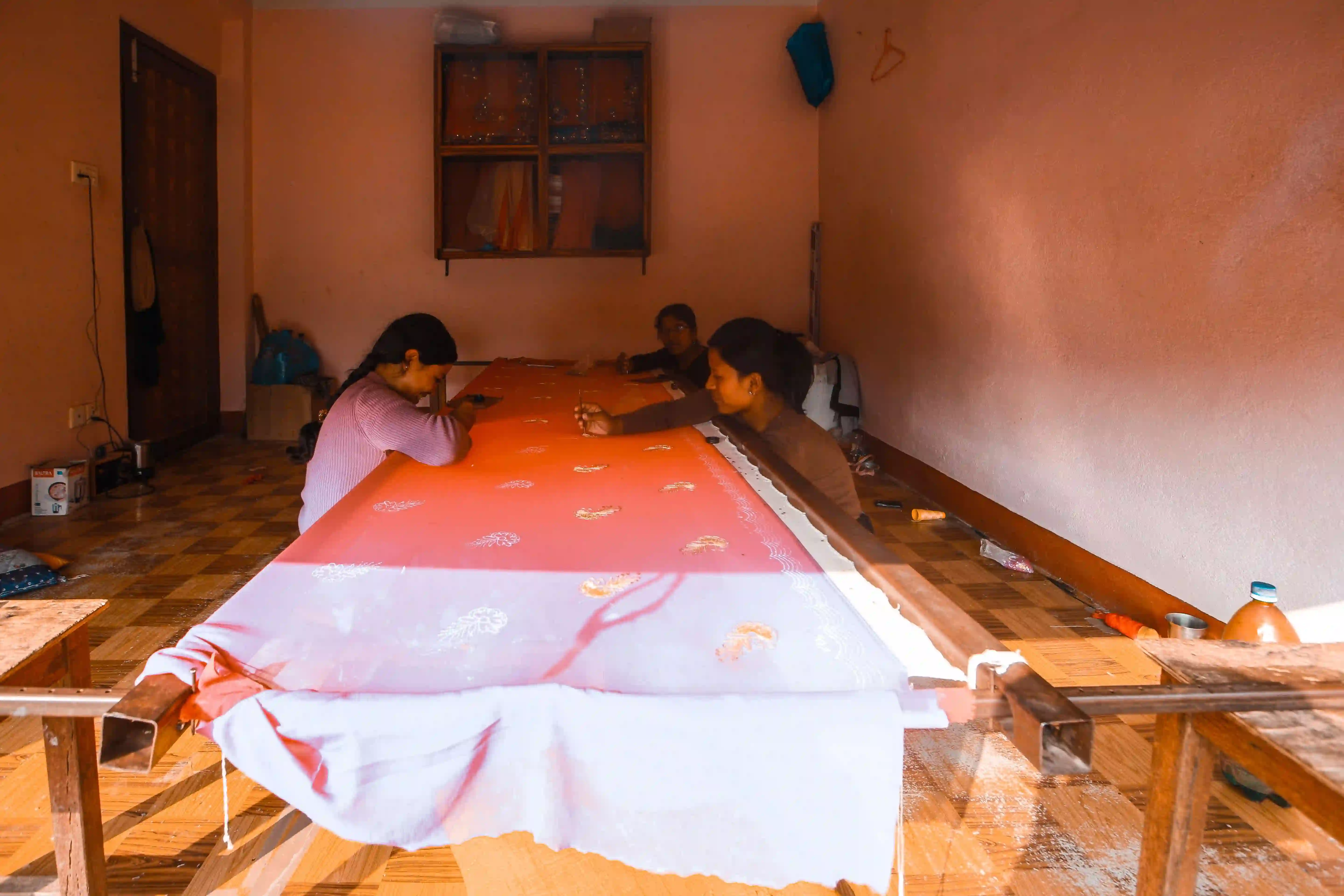
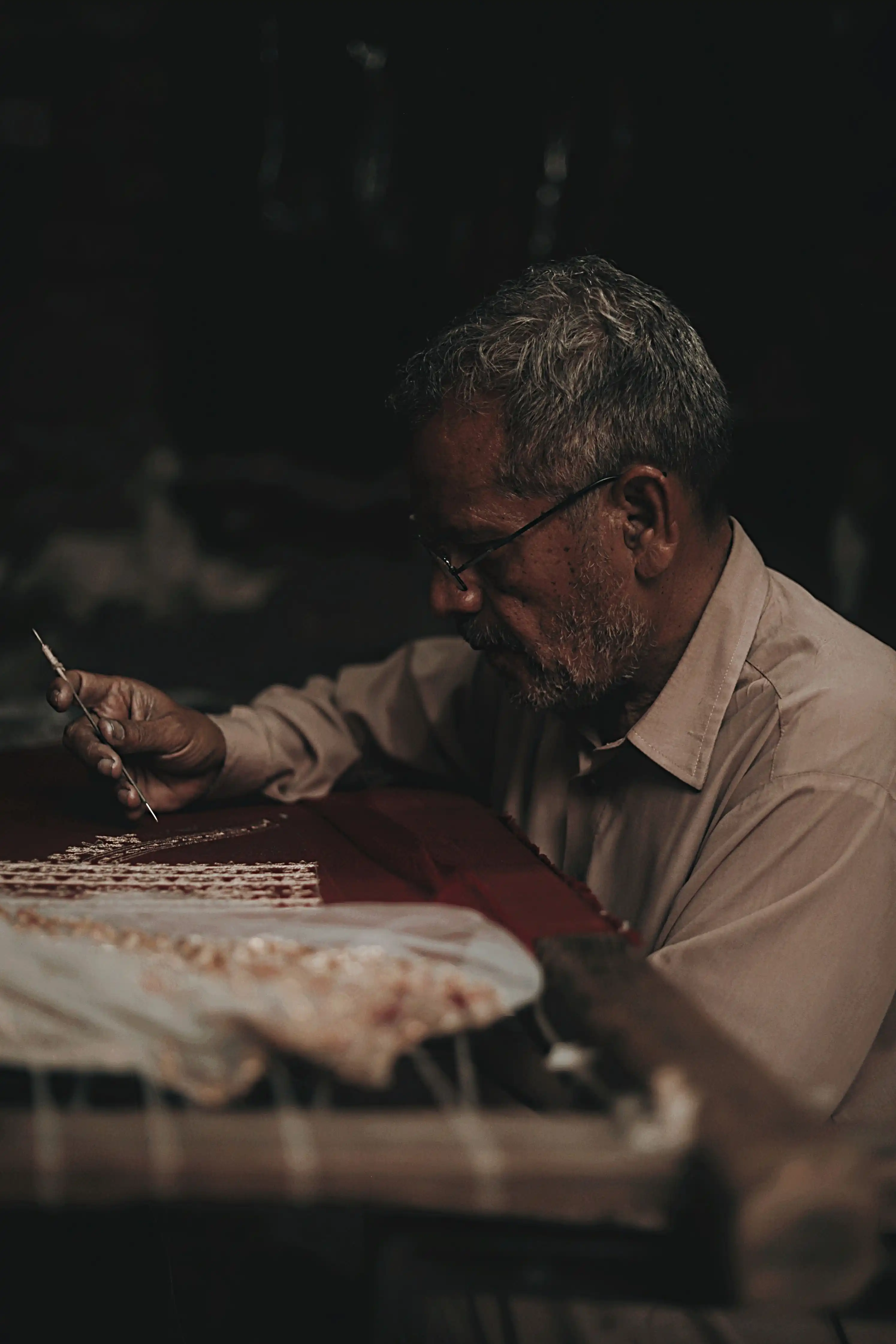
Mounted over the adda (the horizontal four-pillar wooden embroidery frame), master artisans worked in synchronicity. Manipulating the curved aari hook, the artisan passed heavy coiled wires through dense silks and velvets, mastering tension so the metallic weight would neither buckle the cloth nor snap the fine base weave. Under the later patronage of the Nawabs of Awadh in eighteenth-century Lucknow, these craftsmen refined heavy bullion work into whisper-thin three-dimensional flora, establishing the signature Awadhi aesthetic.

The Creation: Wearable Topography and the Modern Atelier
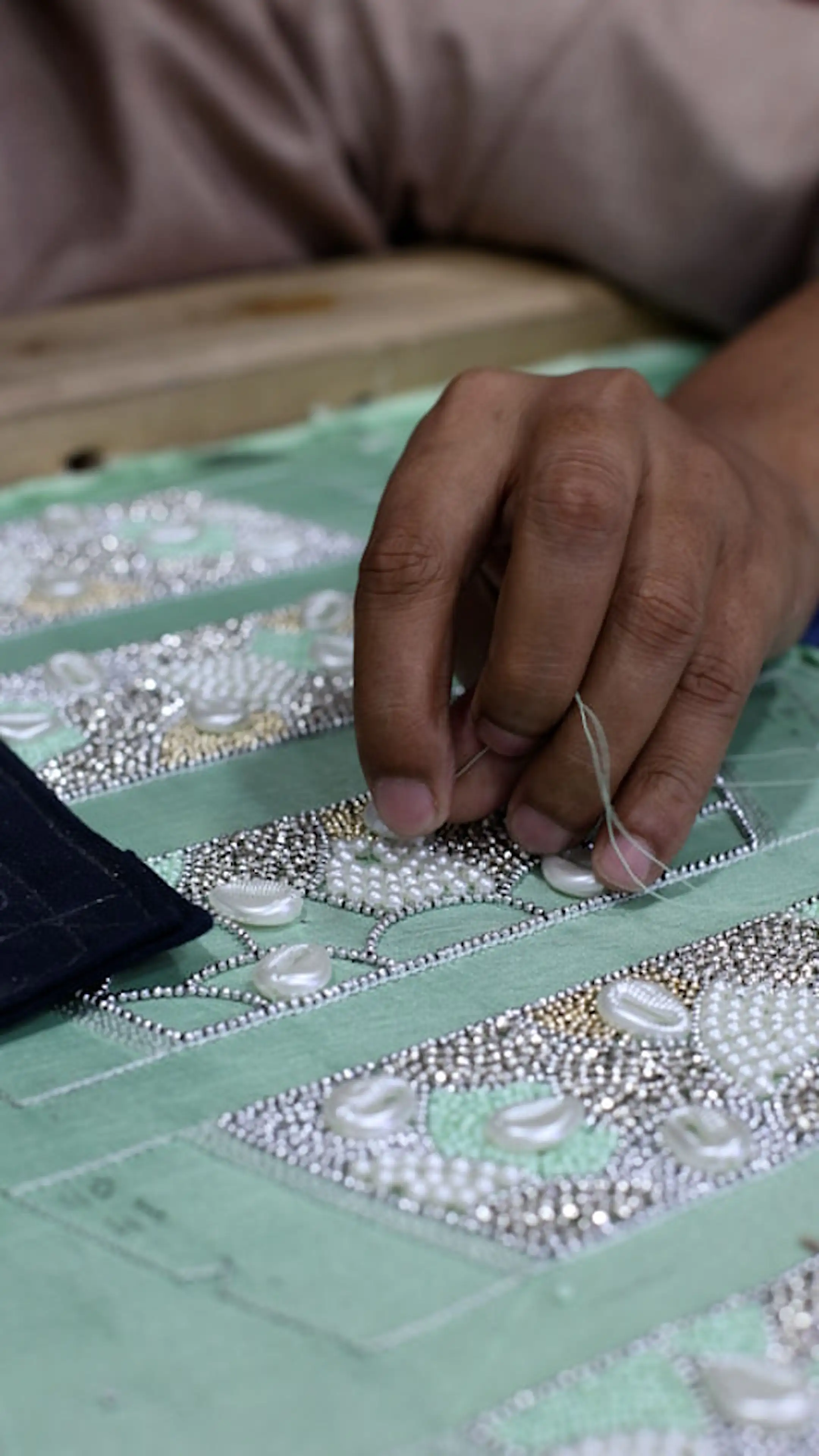
Unlike flat surface embroidery, authentic historic Zardozi is tactile, architectural, and sculptured. Historical court garments—such as the royal angarkha, ceremonial farzi coats, and velvet pishwas—relied on padded couching (zardozi gajji), where layers of twisted cotton cords or felt were basted onto the garment before being encased in coiled gold wire. This generated a relief map across the wearer’s chest, catching candlelight in shifting geometric shadows.
When British colonial tariffs broke up court patronage in the nineteenth century, the craft retreated into the generational bylanes of Lucknow, Bareilly, and Varanasi. Rather than vanishing, it adapted.
In contemporary bespoke ateliers and couture houses, Zardozi has reclaimed its place at the apex of slow craft. Master karigars still sit at the wooden adda, securing thousands of hand-cut metallic springs onto modern silk organza and tailored wool Bandhgalas. While commercial fast fashion has surrendered to plastic sequins and glued lurex, genuine Zardozi remains a five-century testament to the weight, sound, and permanence of hand-wrought metal.
From the tailoredpins team