There is a distinct, almost watery luminescence to real Mukesh (also known as Kamdani) that simply cannot be replicated by plastic. It is the subtle, aristocratic glimmer of pure metal caught in candlelight. Yet, the true art of Mukesh—twisting flattened silver or gold wire (badla) directly into sheer chiffon or georgette to create starry, scattered motifs—was on the precipice of extinction, overshadowed by the speed and cheapness of commercial synthetic sequins.
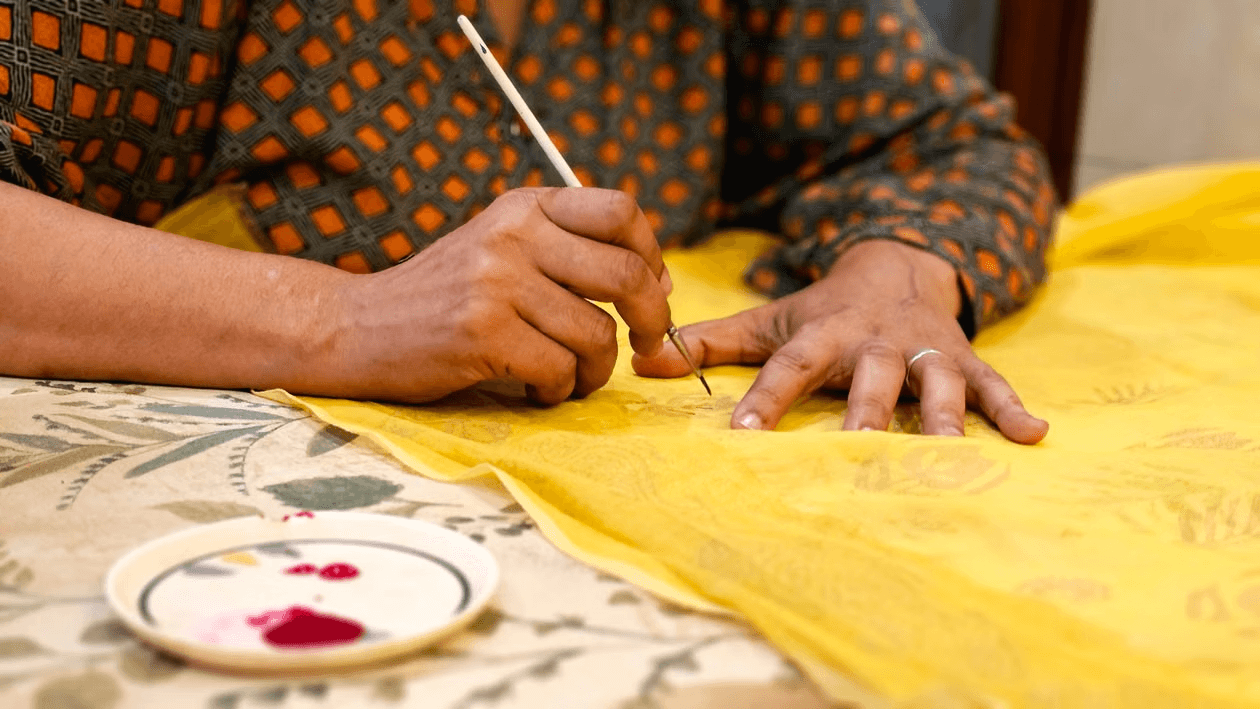
Today, we are witnessing a fierce revival driven exclusively by the ultra-bespoke market. The true Kamdani artisans are a dwindling cohort of aging masters, and their craft cannot be rushed. The process involves threading a flat metallic needle through the fabric, twisting the wire, and flattening it with the thumb to secure it. It is physically taxing and requires microscopic precision to avoid tearing the delicate silk base.
For the modern bespoke bride, patience has become the ultimate luxury. Waitlists for authentic, heavy Kamdani veils and lehengas now stretch past 14 months. These clients understand that they are not merely commissioning a wedding garment; they are funding the preservation of a dying art form. They reject the flashy, flat shine of synthetics, opting instead for the heavy, cool drape of real silver that will tarnish beautifully into an heirloom over generations.